
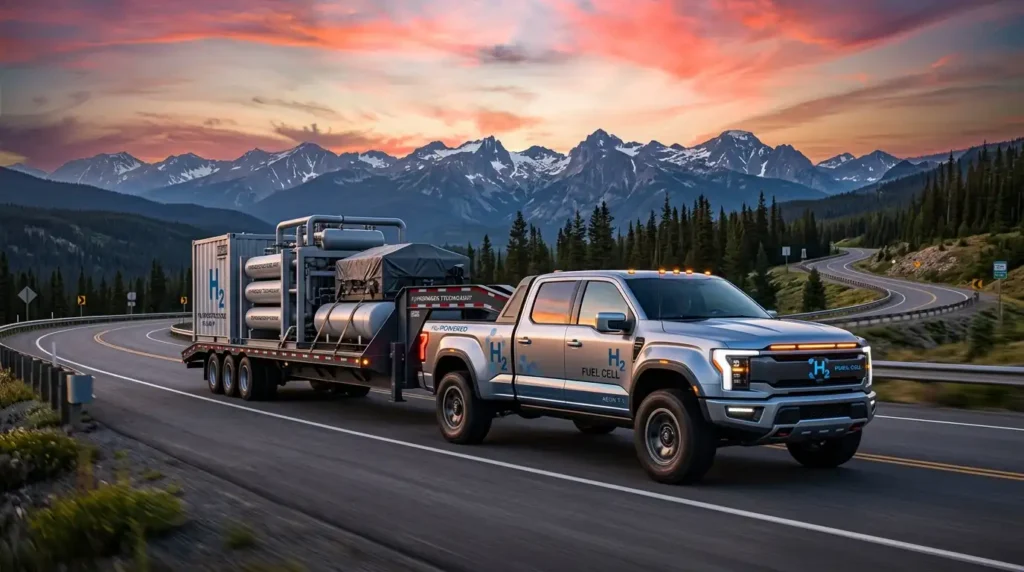
While battery-electric vehicles (BEVs) have proven highly successful for passenger cars and light-duty urban pickup trucks, heavy towing presents a formidable physical challenge. Massive trailer loads drastically reduce battery range, while huge battery packs add substantial curb weight that cuts into payload capacities. Enter hydrogen fuel cell electric vehicle (FCEV) technology—a solution that combines zero-emission electric motor performance with high energy density and rapid refueling. This article examines whether hydrogen-electric pickups can truly replace diesel for severe-duty applications.
Understanding the Heavy Towing Dilemma: Batteries vs. Fuel Cells
 To understand why hydrogen fuel cells are generating intense interest in the commercial and heavy-duty truck sectors, one must first look at the physics of towing heavy loads over long distances.
When pulling a 15,000-pound trailer at highway speeds, aerodynamic drag and mechanical resistance increase dramatically. In traditional battery-electric pickups, this heavy load can reduce driving range by 50% to 60%. While adding a larger lithium-ion battery pack might seem like the obvious fix, it creates a cascading weight penalty:
- Weight Penalties: Battery packs capable of delivering true long-distance heavy towing can weigh between 3,000 and 4,500 pounds alone. Because Gross Vehicle Weight Ratings (GVWR) are legally capped, every extra pound of battery directly reduces the pickup’s usable payload and towing rating.
- Refueling and Downtime: Charging a massive 200+ kWh battery pack from 10% to 80% at a public fast charger can take anywhere from 40 to 90 minutes—assuming a high-capacity fast charger is available and accessible with a long trailer attached.
Hydrogen-electric pickups solve these key pain points by generating electricity onboard. Instead of storing energy exclusively in heavy chemical battery cells, an FCEV pickup carries compressed hydrogen gas in carbon-fiber tanks. The hydrogen gas feeds into a fuel cell stack, where an electrochemical reaction with atmospheric oxygen produces electricity, powering the electric motors and emitting only pure water vapor from the tailpipe.
Key Advantages: Why Hydrogen Fuel Cells Fit Heavy Duty Pickups
Engineers and fleet managers view hydrogen as a promising direct replacement for turbodiesel powertrains in heavy-duty commercial applications for several compelling reasons:
1. Uncompromised Energy Density and Payload
Hydrogen possesses an extraordinary energy density by weight—roughly three times higher than conventional gasoline or diesel fuel per kilogram. While compressed gas tanks do take up physical space, the overall system weight of a fuel cell stack and hydrogen tanks is significantly lower than an equivalent high-capacity battery pack. This weight savings allows hydrogen pickups to maintain high payload capacities and heavy towing figures comparable to three-quarter-ton and one-ton diesel trucks.
2. Rapid Refueling Times
For commercial operators, construction crews, and long-distance haulers, time spent parked at a charging station represents lost revenue. Refueling a hydrogen fuel cell pickup takes approximately 5 to 10 minutes at high-pressure (70 MPa) hydrogen pumps—matching the convenience and speed of filling up at a standard diesel pump.
3. Continuous Instant Torque and Cold Weather Resilience
Electric motors produce maximum torque instantly from zero RPM, making them inherently superior for launching heavy trailers up steep inclines. Hydrogen pickups leverage these powerful electric motors while remaining resilient in freezing conditions, as fuel cells operate efficiently without the severe range loss often experienced by chemical batteries in low temperatures.
How Hydrogen-Electric Pickups Compare to Diesel
To evaluate how hydrogen fuel cells measure up against traditional diesel engines and battery-electric options, consider the following performance overview:
| Metric / Capability | Traditional Turbodiesel | Battery-Electric (BEV) | Hydrogen Fuel Cell (FCEV) |
|---|---|---|---|
| Tailpipe Emissions | CO2, NOx, and Particulates | Zero Tailpipe Emissions | Zero Tailpipe Emissions (Water Vapor) |
| Torque Delivery | High Torque at Low RPM | Instantaneous High Torque | Instantaneous High Torque |
| Refueling / Charge Time | 5 to 10 minutes | 45 to 120+ minutes | 5 to 10 minutes |
| Towing Range Retention | Moderate reduction under load | Severe reduction (up to 60%) | Moderate reduction under load |
| Curb Weight Impact | Standard engine weight | Extremely heavy battery pack | Moderate (Tanks + Fuel Cell + Buffer Battery) |
The Remaining Hurdles to Widespread Adoption
Despite hydrogen’s clear physical advantages for heavy haulage, several significant challenges must be addressed before hydrogen fuel cell pickups can replace diesel on a massive scale:
1. Fueling Infrastructure Gaps
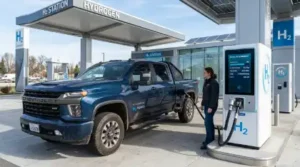 The primary barrier facing hydrogen pickup adoption is the scarcity of refueling stations. While light-duty battery-electric chargers have expanded across major highways, public hydrogen refueling stations remain largely concentrated in select commercial hubs and transit corridors. Building a robust cross-country network of high-throughput hydrogen fueling stations will require substantial capital investment.
2. Hydrogen Production and Green Energy Transition
To achieve true environmental benefits, the industry must transition from “grey” hydrogen (produced from natural gas via steam methane reforming) to “green” hydrogen produced via water electrolysis using renewable energy sources like wind, solar, and hydroelectric power. You can learn more about clean hydrogen production pathways directly from the U.S. Department of Energy Clean Hydrogen Basics Guide.
3. Equipment Cost and System Complexity
Fuel cell stacks utilize specialized materials, including platinum catalysts and high-pressure carbon-fiber storage tanks. While volume manufacturing and technological advancements are driving prices down, early hydrogen-electric pickup offerings carry a cost premium over traditional diesel counterparts.
The Verdict: Can Hydrogen Replace Diesel for Heavy Towing?
The short answer is yes, but with a gradual rollout focused on commercial fleets first. While battery-electric pickups are well-suited for light-duty commuters, local tradespeople, and light recreational towing, hydrogen fuel cell technology is proving to be the most viable zero-emission successor for heavy long-distance towing and commercial haulage.
As hydrogen production scales down in cost and commercial corridor refueling stations continue to expand, hydrogen-electric pickups are positioned to offer the best of both worlds: the zero-emission electric torque necessary for modern sustainability goals, combined with the quick refueling and heavy-load endurance that diesel owners have relied on for generations.