
The End of the Spare Fuse Requirement
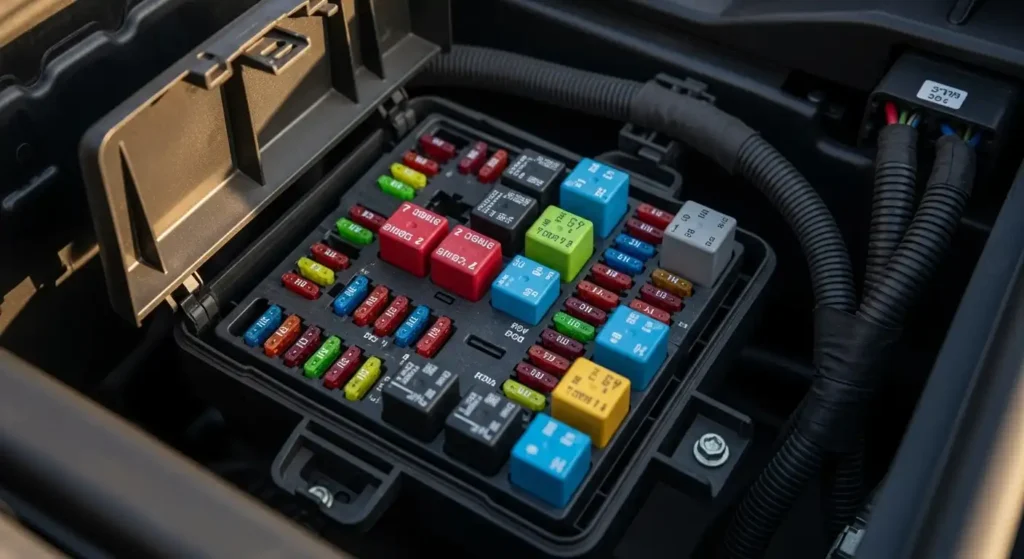
For years, 49 CFR § 393.95(b) mandated that every power unit carry at least one spare fuse for each type and size needed to operate any required parts and accessories. The logic was simple: if a fuse blew for your headlights or turn signals in the middle of the night, you needed to be able to fix it on the shoulder to remain safe.
Why the Change?
Effective April 20, 2026, the FMCSA has officially removed this requirement. The agency cited several key reasons for this shift:
- Technological Advancement: Modern trucks increasingly use circuit breakers rather than traditional glass or blade fuses. Circuit breakers can be reset, making a spare physical part unnecessary.
- Power Distribution Modules: Many newer CMVs utilize complex electronic power distribution modules where individual “fuses” aren’t user-serviceable on the side of the road.
- Availability: In the rare event that a fuse does blow, they are widely available at nearly every truck stop, gas station, and convenience store in North America.
The Verdict: While you are no longer legally required to carry them for a DOT inspection after April 20, 2026, many safety managers still recommend keeping a small variety pack in the cab. It’s a low-cost way to prevent a minor electrical glitch from turning into a multi-hour downtime event.
Retiring the Liquid-Burning Flare
The second major change involves warning devices for stopped vehicles. The FMCSA has officially removed all references to liquid-burning flares from the list of approved emergency equipment.
Why are Liquid Flares Gone?
Effective March 23, 2026, liquid-burning flares (often called “oil lanterns” or “pot torches” in older regulations) are no longer recognized as valid warning devices. The FMCSA noted that these devices are essentially obsolete. They pose a significant fire risk, are messy to maintain, and have been largely replaced by safer, more effective technology.
If your fleet still has these rolling around in the side boxes of older units, it is time to decommission them. Carrying them won’t necessarily result in a violation—unless you are using them as your only means of compliance—but they no longer count toward your required emergency equipment tally.
What You STILL Need: The 2026 Compliance Checklist
Deregulations are great, but they don’t mean the emergency kit is empty. To pass a Level I or Level II North American Standard Inspection, your power unit must still be equipped with the following:
| Equipment Type | Current Requirement |
|---|---|
| Fire Extinguisher | Must be properly charged, securely mounted, and labeled. Standard trucks need a 5 B:C rating (or two 4 B:C). Hazmat haulers require a 10 B:C rating. |
| Warning Devices | Three (3) bidirectional emergency reflective triangles OR at least six (6) solid-fuel flares (fusees). Note: Liquid flares are no longer an option. |
| Wheel Chocks | While not a federal FMCSA requirement for all vehicles, they are often required by specific state laws or company safety policies for loading/unloading. |
Additional 2026 Modernization Updates
The removal of fuses and flares is part of a larger “12 Deregulatory Changes” initiative by the FMCSA. To keep your fleet running smoothly in 2026, keep an eye on these related updates:
1. Electronic DVIRs (eDVIRs)

The rules in Part 396 now explicitly allow for electronic Driver Vehicle Inspection Reports. While many fleets were already doing this, the new language removes any ambiguity, making it clear that paper is no longer the “default” standard in the eyes of the law.
2. ELD Documentation
Drivers are no longer required to carry physical, paper user manuals for their Electronic Logging Devices (ELDs). Digital versions accessible through the ELD interface are now sufficient for roadside inspections.
3. Rear Impact Guard Labels
FMCSA has also streamlined requirements regarding the labeling of rear impact guards (DOT bumpers), acknowledging that these labels often wear off or become unreadable through normal wear and tear, and shouldn’t be a primary cause for a “failed” inspection if the guard itself is structurally sound.
Safety vs. Compliance: A Note for Fleet Managers
“Just because it isn’t required by the DOT doesn’t mean it isn’t a good idea for your drivers.”
Compliance is the minimum standard for staying on the road. Safety is about preparedeness. While you can now clear out the “fuse clutter,” ask yourself if your drivers are prepared for common road issues. For example, many modern fleets are replacing traditional fusees with LED electronic flares. While the FMCSA still prioritizes reflective triangles, LED flares are safer, reusable, and much more visible in inclement weather.
Conclusion
The 2026 FMCSA rule changes are a welcome breath of fresh air for an industry often bogged down by outdated requirements. By removing the mandate for spare fuses and liquid-burning flares, the agency is finally catching up to the realities of modern truck manufacturing.
Action Items:
- Update your Driver Handbooks to reflect that liquid flares are no longer permitted.
- Ensure your pre-trip inspection checklists still prioritize the fire extinguisher and reflective triangles.
- Confirm that your drivers know how to access their digital ELD manuals and eDVIRs to avoid confusion during an inspection.